



The origins of Ukraine
Ukraine was not widely called by its present name until the 19th century. Different parts of present Ukraine were invaded and occupied in the first millennium BC by the Cimmerians, Scythians, and Sarmatians and, later, by the Goths, Huns, Bulgars, Avars, Khazars, Magyars, and Pechenegs.
The most significant development of this entire period, however, was the movement of some Slavic tribes in the 5th and 6th centuries from their primordial homeland north of Carpathian Mountains eastward into forest and forest-steppe region of western and north-central Ukraine. From there the Slavs eventually expanded farther north into territories of the future Russian state around Moscow.
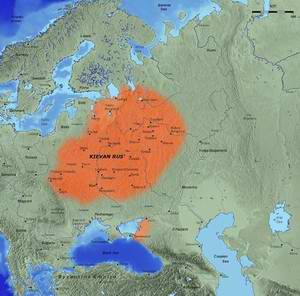
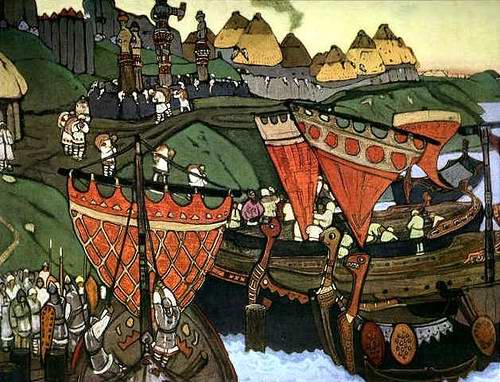
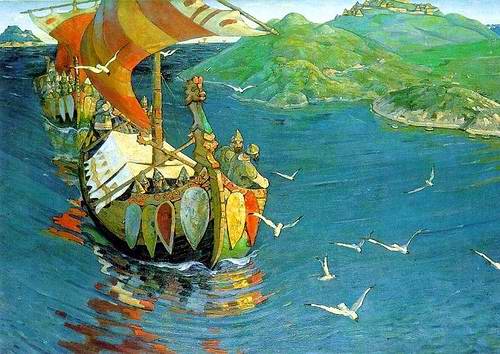
Kiev, situated along the Dnepr River, was one of Slavs’ earliest settlements. The state known as Kievan Rus arose from the intermixture of Polianians with those Varangians (Norsemen) who controlled the Dnepr River trade route connecting the Baltic Sea with Byzantium.
The name Rus, which first designated the lands around Kiev, later came to include the entire Kievan domain.
Kievan Rus state reached its zenith in the 10th and 11th centuries under the rulers Vladimir I (St. Vladimir) and his son Yaroslav I (Yaroslav the Wise). Vladimir I adopted Christianity as the official religion of his realm about AD 990, and the church hierarchy was formed under the auspices of Byzantines and the patriarch at Constantinople.
Christianity gave eastern Slavic people their first written language, called Church Slavonic. Kiev Rus reached the height of its power in the 11th century, and Kiev became an important political and cultural center of Eastern Europe.
Kievan Rus map